
In this guide
- Table of Contents
- The golden rule
- 12 immersion rod safety rules
- Things You Need
- Step-by-Step Instructions
- Why immersion rods give shocks
- Bathroom and hostel safety
- Burn safety
- If someone gets an electric shock
- Warning signs: replace the rod now
- Safer alternatives
- Quick safety checklist
- Final word on immersion rod safety tips
- FAQs
- Final Thoughts
Every winter, news reports in India carry the same sad stories: a student found unconscious in a hostel bathroom, a child burned by a tipped-over bucket, a family member shocked while checking the water temperature. Almost all of these incidents involve an immersion rod – one of the cheapest and most common water heaters in Indian homes. In this guide on immersion rod safety tips, we keep everything simple and practical for Indian homes.
Table of Contents
Immersion rods are not dangerous by design. They become dangerous when they are cracked, used in the wrong bucket, used with wet hands or touched while switched on. These immersion rod safety tips are simple, cost nothing and can prevent serious accidents. They follow basic electrical safety practice and the instructions manufacturers print on the box – always read your rod’s manual as well.
The golden rule
Never touch the water, the bucket or the rod while it is switched on. Always switch off at the socket and unplug before checking the temperature, adding water or removing the rod. This single habit prevents most immersion rod shocks.
12 immersion rod safety rules
- Buy an ISI-marked rod from a known brand. Avoid unbranded rods with no certification.
- Prefer a rod with automatic cut-off or a thermostat, so it stops heating by itself.
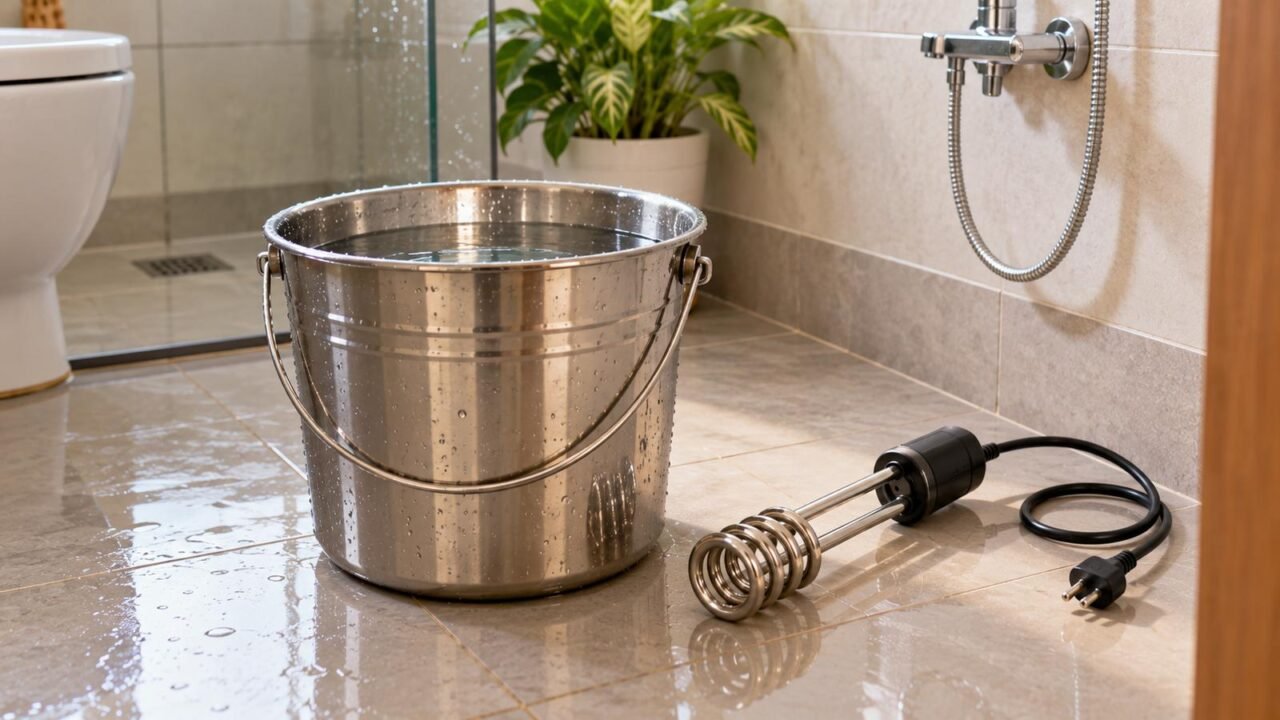
- Use only a plastic bucket in good condition. Never a metal bucket, drum or tub.
- Fill water first, then put the rod in. Never switch on a rod outside water – it can overheat and crack within seconds.
- Respect the water line: the heating element must be fully under water, but the plastic head and the minimum-level mark must stay above it.
- Keep the element away from the bucket’s walls and bottom using the clip, so the plastic does not melt.
- Plug in with dry hands into a dry, properly earthed wall socket. Avoid extension boards and multi-plugs.
- Keep it on the floor, away from where people walk, and never on a bed, chair or table.
- Stay nearby. Do not leave home or fall asleep with a rod heating.
- Keep children and pets away from the bucket and the cable while heating.
- Switch off and unplug before removing the rod. Let it cool on a heat-safe surface before storing.
- Inspect before every winter: replace rods with cracked heads, burnt cables, loose plugs or bent elements.
Things You Need
- ISI-marked immersion rod (ideally with auto cut-off)
- Plastic bucket in good condition
- Dry, earthed wall socket
- RCCB at the distribution board (recommended)
Step-by-Step Instructions
-
Step 1: Inspect the rod
Check the plastic head, cable, plug and element for cracks, burns, bends or scale. Replace the rod if any are damaged.
-
Step 2: Fill the bucket first
Use a plastic bucket, fill it with water, then place the rod so the element is fully under water and the head stays above the waterline.
-
Step 3: Switch on with dry hands
Plug into a dry, earthed wall socket with dry hands, then switch on. Avoid extension boards.
-
Step 4: Stay nearby and do not touch
Keep children away, stay close, and never touch the water or bucket while the rod is on.
-
Step 5: Switch off before removing
Switch off and unplug first, then remove the rod, let it cool and mix the hot water with cold water before use.
Why immersion rods give shocks
- Cracks or damage in the plastic head let water reach live parts.
- Water above the safe line enters the head.
- No earthing in the socket or wiring, so leakage current has nowhere safe to go.
- Metal buckets conduct electricity if anything leaks.
- Wet hands or wet floors make the body a better path for current.
An RCCB (residual current circuit breaker) at your distribution board can cut power within a fraction of a second if current leaks to earth – including through a person. If your home has no RCCB, ask a licensed electrician to install one. It protects against shocks from all appliances, not just immersion rods.
Bathroom and hostel safety
- Heat water outside the bathroom where possible, and carry the bucket in only after switching off and unplugging.
- Never use an immersion rod in a bathroom with a wet floor where the socket is close to water.
- In hostels and PGs, follow the warden’s rules on where and when rods can be used.
- Do not share a socket with chargers and other appliances.
- If many students use rods in the same building, overloaded wiring can overheat – report warm sockets or burning smells.
Burn safety
- Water heated by a rod can reach near boiling if left too long. Mix with cold water before bathing.
- Carry hot buckets with both hands, close to the floor, and keep the path clear.
- Do not let children carry or stand near buckets of hot water.
- If someone is scalded, cool the burn under cool (not ice-cold) running water for at least 20 minutes and seek medical help for anything larger than a small area, for burns on the face, hands or genitals, or for any burn on a child.
If someone gets an electric shock
- Do not touch the person while they may still be in contact with the rod, water or bucket.
- Switch off the power at the socket or the main switch / MCB.
- If you cannot switch off, separate them from the source using a dry, non-conductive object such as a wooden stick or plastic chair, while standing on something dry.
- Call for emergency help – 112 or 108 in India.
- If the person is not breathing normally and you are trained, start CPR. Keep them warm and still until help arrives.
- Anyone who has had a significant shock should be checked by a doctor, even if they seem fine.
Warning signs: replace the rod now
- A tingling feeling when near the bucket.
- The MCB or RCCB trips when the rod is switched on.
- Melted, burnt or cracked plastic on the head or cable.
- A bent, swollen or heavily corroded element.
- The plug is loose, hot or burnt.
Safer alternatives
If you use hot water every day, a geyser with built-in safety devices is safer and more convenient. For a kitchen sink or washbasin, an instant geyser works well. For hostels, choose a rod with automatic cut-off and touch protection. See our best immersion rod water heaters, best instant geysers and best geysers guides.
Quick safety checklist
| Before switching on | While heating | After heating |
|---|---|---|
| ISI rod, no cracks | Do not touch water or bucket | Switch off and unplug first |
| Plastic bucket, water filled | Stay nearby | Remove rod, let it cool |
| Element under water, head above | Keep children away | Mix with cold water |
| Dry hands, earthed wall socket | No extension boards | Store dry, out of reach |
More winter safety: read our room heater safety tips and electrical safety tips.
Final word on immersion rod safety tips
We review this guide on immersion rod safety tips regularly as models and listings change. Always check the latest details on the product page before you buy, and see official information on the Bureau of Indian Standards (BIS).
Frequently Asked Questions
1. Can an immersion rod give an electric shock?
Yes, if it is damaged, the water is above the safe line, the socket is not earthed, a metal bucket is used, or someone touches the water while it is on. Use an ISI-marked rod correctly and install an RCCB for protection.
2. Is it safe to use an immersion rod in a plastic bucket?
Yes, a plastic bucket in good condition is the right choice. Keep the element away from the bucket walls and bottom so the plastic does not melt.
3. How do I check the water temperature safely?
Switch off at the socket and unplug the rod first. Then check the water with your hand or a thermometer.
4. What should I do if someone gets a shock from an immersion rod?
Do not touch them while they are in contact with the source. Switch off the power, or separate them with a dry non-conductive object, then call 112 or 108 and give first aid if trained.
5. How often should I replace my immersion rod?
Replace it whenever you see cracks, burns, a damaged plug, a bent element or heavy scale, or if it trips the MCB or RCCB. Inspect it every winter.
Final Thoughts
Immersion rods are safe only when used with care. Buy an ISI-marked rod, preferably with auto cut-off, use a plastic bucket, keep the element under water and the head above it, plug in with dry hands, never touch the water while it is on, and always switch off before removing it. Add an RCCB to your home, and replace any damaged rod immediately.