
In this guide
- 1. Check your decorative lights before putting them up
- 2. Do not overload extension boards
- 3. Keep outdoor lights and wires protected
- Things You Need
- Step-by-Step Instructions
- 4. Keep lights, diyas and decorations away from fabric
- 5. Watch the load in the kitchen
- 6. Know your MCB and RCCB
- 7. Protect appliances from crackers and smoke
- 8. Inverter and power backup safety
- 9. Children and pets
- 10. If something goes wrong
- Quick Diwali electrical safety checklist
- Final word on Diwali electrical safety tips
- FAQs
- Final Thoughts
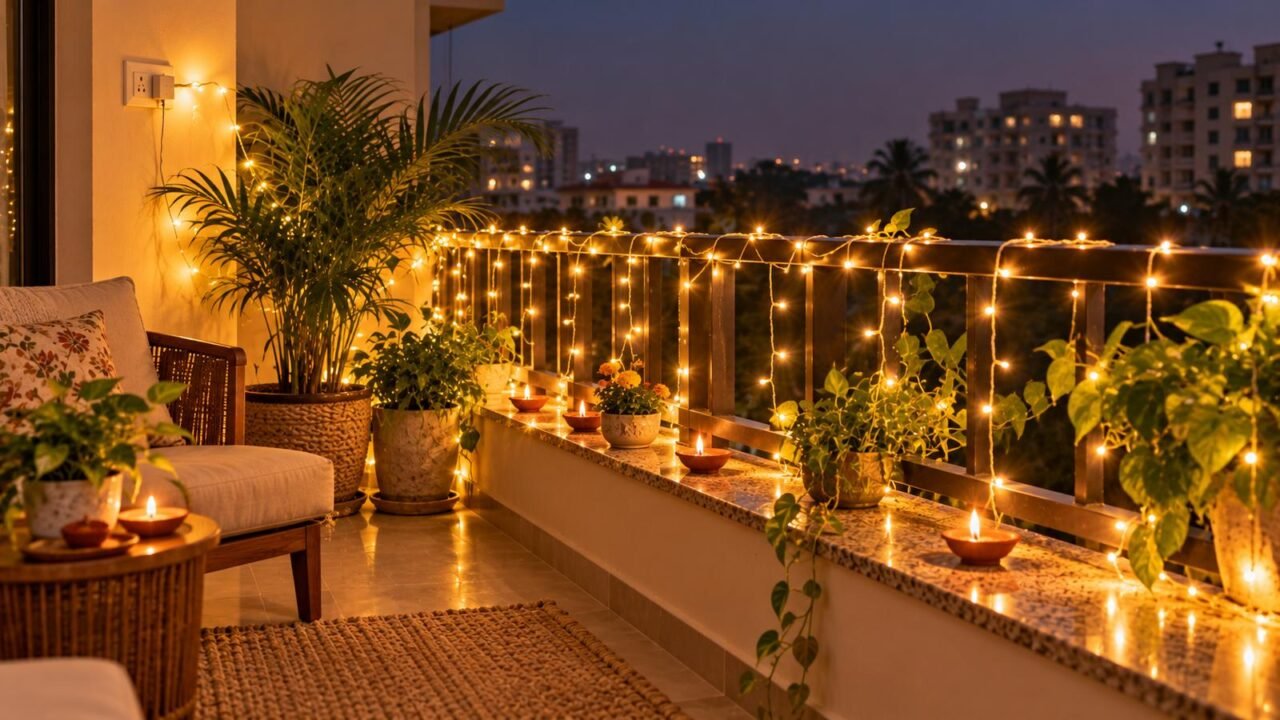
Diwali turns every home into a festival of lights – serial lights on the balcony, lanterns in the windows, extra lamps in the pooja room, and the kitchen running at full capacity for sweets and snacks. It also puts more electrical load on a home than almost any other week of the year. Old light strings, overloaded extension boards and decorations close to curtains are behind many of the electrical problems and small fires that happen during the festival. In this guide on Diwali electrical safety tips, we keep everything simple and practical for Indian homes.
These Diwali electrical safety tips are simple and mostly free. They follow basic electrical safety practice and the advice appliance and lighting manufacturers give in their manuals. If anything in your home’s wiring looks or smells wrong, call a licensed electrician rather than trying to fix it yourself.
1. Check your decorative lights before putting them up
- Lay out last year’s light strings and look for cracked or peeled wires, loose bulbs, melted spots and damaged plugs. Throw away damaged strings – do not tape them.
- Test each string on a table for a few minutes before hanging it.
- Prefer LED lights. They use far less electricity and stay much cooler than old filament bulbs.
- Buy lights with a proper plug and, where possible, a recognised safety mark rather than loose unbranded strings.
2. Do not overload extension boards
An extension board feeding ten light strings is common during Diwali, and it is one of the most common causes of overheating. Light strings themselves draw little power, but the problem starts when the same board also runs a heater, iron, kettle or microwave.
- Use a good-quality extension board with a fuse or circuit breaker and enough rating for the load.
- Never “daisy-chain” one extension board into another.
- Plug high-wattage appliances – room heaters, geysers, microwaves, induction cooktops, irons – directly into wall sockets, never into the same board as the lights.
- If a plug, socket or board feels warm to touch, unplug and reduce the load.
3. Keep outdoor lights and wires protected
- Use lights marked as suitable for outdoor use on balconies and terraces.
- Keep connections and plugs off the floor and away from water, plant pots and wet areas.
- Do not run wires through door and window gaps where they can get pinched.
- Avoid hanging lights on metal grills with sharp edges that can cut through insulation.
Things You Need
- Good-quality extension board with fuse or breaker
- LED decorative lights
- Socket covers (if you have small children)
- Bucket of water or sand
- Torch for the distribution board
Step-by-Step Instructions
-
Step 1: Inspect your lights
Lay out last year’s light strings, check wires, bulbs and plugs, test them on a table and discard any that are damaged.
-
Step 2: Plan your sockets
Decide which sockets will power lights and which will power appliances. Keep heaters, microwaves and irons on wall sockets.
-
Step 3: Hang lights safely
Use outdoor-rated lights outside, keep plugs off the floor and away from water, and keep lights away from fabric and paper.
-
Step 4: Manage kitchen load
Avoid running several high-wattage appliances on the same circuit at once during festival cooking.
-
Step 5: Prepare for emergencies
Show everyone the main switch, keep water or sand ready for diyas, and know emergency numbers.
4. Keep lights, diyas and decorations away from fabric
- Keep lamps, lanterns and bulbs away from curtains, paper decorations, dried flowers and cloth toran.
- Place diyas and candles on stable, non-flammable surfaces, away from curtains and children’s reach.
- Never leave diyas burning in an empty room or overnight.
- Keep a bucket of water or sand near the pooja area and balconies on Diwali night.
5. Watch the load in the kitchen
Festival cooking often means the mixer, microwave, OTG, air fryer, induction cooktop and kettle all run within the same hour. Most home kitchen circuits are not designed for all of them at once.
- Spread out heavy appliances: do not run the OTG, induction cooktop and microwave together on the same circuit.
- Use dedicated wall sockets for high-wattage appliances.
- Keep appliances and cords away from the gas stove and the sink.
- If the MCB trips repeatedly, do not keep resetting it – reduce the load and get the circuit checked.
6. Know your MCB and RCCB
- MCB (miniature circuit breaker): trips when a circuit is overloaded or short-circuited.
- RCCB (residual current circuit breaker): trips when current leaks to earth – for example, through a person touching a faulty appliance – and can prevent serious electric shocks.
Make sure everyone at home knows where the distribution board is and how to switch off the main supply. If your home has no RCCB, consider asking an electrician to install one after the festival.
7. Protect appliances from crackers and smoke
- Keep crackers well away from AC outdoor units, inverters, meter boxes and power cables.
- Close windows near the AC outdoor unit and balcony electronics during cracker time.
- Do not burst crackers near overhead power lines or transformers.
- Smoke and fine dust can settle on electronics; wipe and clean them after the festival.
8. Inverter and power backup safety
- Do not connect heavy loads like heaters, irons or geysers to an inverter meant for lights and fans.
- Keep the inverter and battery in a ventilated place, away from decorations and diyas.
- Check battery water levels (for tubular batteries) before the festival.
9. Children and pets
- Use socket covers on unused low sockets.
- Keep light strings, cords and extension boards out of reach and out of walking paths.
- Do not let children play with decorative lights or plug them in.
10. If something goes wrong
- Burning smell or smoke from a socket: switch off the main supply at the distribution board, do not touch the socket, and call an electrician.
- Electrical fire: switch off the main supply. Never throw water on an electrical fire; use a fire extinguisher suitable for electrical fires (CO₂ or dry powder) if you have one and it is safe, otherwise leave and call the fire service (101).
- Electric shock: do not touch the person while they are in contact with the source. Switch off the power or separate them using a dry non-conductive object, then call for medical help (108 or 112).
Quick Diwali electrical safety checklist
| Check | Done |
|---|---|
| Old light strings inspected; damaged ones thrown away | ☐ |
| LED lights used where possible | ☐ |
| Extension boards not overloaded or chained | ☐ |
| Heaters, microwaves and irons on wall sockets only | ☐ |
| Lights and diyas away from curtains and paper | ☐ |
| Outdoor plugs off the floor and away from water | ☐ |
| Everyone knows where the main switch is | ☐ |
| Bucket of water or sand ready on Diwali night | ☐ |
Using a room heater as nights get colder? Read our room heater safety tips. Cleaning before the festival? See our Diwali cleaning checklist.
Final word on Diwali electrical safety tips
We review this guide on Diwali electrical safety tips regularly as models and listings change. Always check the latest details on the product page before you buy, and see official information on the Bureau of Indian Standards (BIS).
Frequently Asked Questions
1. Are LED Diwali lights safer?
Generally yes. LED lights use far less electricity and stay much cooler than filament bulbs, reducing the risk of overheating near decorations.
2. How many light strings can I plug into one extension board?
It depends on the board’s rating and the lights’ wattage. LED strings use little power, but never chain boards together, and never put high-wattage appliances on the same board as lights.
3. Why does my MCB keep tripping during Diwali?
Usually because too many appliances are running on one circuit, or a light string or appliance is faulty. Reduce the load and unplug recent additions. If it continues, call an electrician.
4. What should I do if a socket starts smoking?
Switch off the main supply at the distribution board, do not touch the socket, and call a licensed electrician. Do not use water.
5. Is it safe to keep decorative lights on overnight?
It is safer to switch them off at night and when nobody is at home. A timer plug makes this easy.
Final Thoughts
A safe Diwali starts with a few simple checks. Inspect your lights, use LEDs, keep extension boards light and heavy appliances on wall sockets, and keep lights and diyas away from fabric. Spread out kitchen appliances, know where the main switch is, and keep water or sand ready on Diwali night. Then enjoy the lights without worry.