
In this guide
- The quick answer
- Dishwasher vs hand washing: side-by-side
- Things You Need
- Step-by-Step Instructions
- How clean do Indian utensils get?
- Water and electricity
- Time and effort
- Hygiene
- What should never go in a dishwasher
- Which is better for your home?
- Tips for using a dishwasher with Indian cooking
- Cost over the years
- If you continue washing by hand: do it better
- Common myths
- Final word on dishwasher vs hand washing
- FAQs
- Final Thoughts
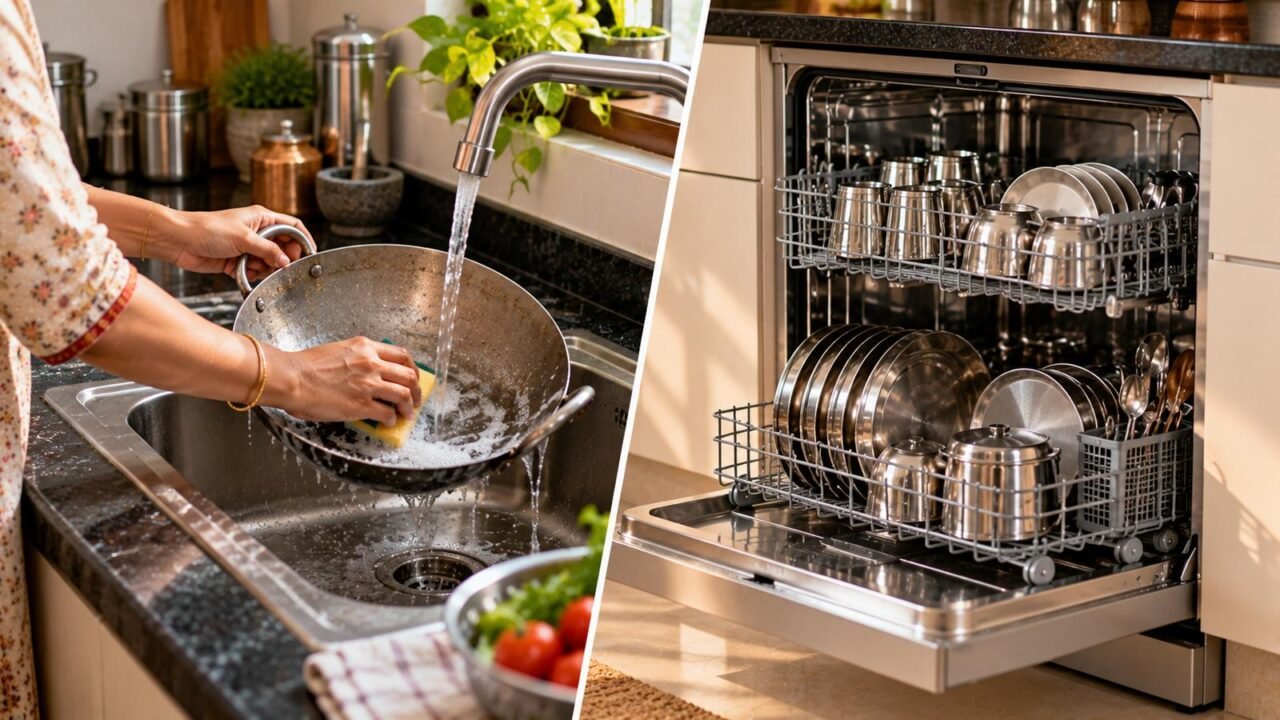
“Is a dishwasher good for Indian utensils?” is one of the most searched kitchen questions in India – and for good reason. Indian cooking leaves behind oil, turmeric, burnt milk, sticky rice and dried dal, on heavy steel kadhais, tawas and pressure cookers. Many families have heard that dishwashers cannot handle this. Others swear their dishwasher has given them back an hour every day. Our dishwasher vs hand washing comparison below gives you a clear answer for your home.
This guide compares a dishwasher with hand washing for a typical Indian kitchen: how clean the utensils get, water and electricity use, time, hygiene, cost and which utensils should never go in a machine. It is based on how dishwashers work and on manufacturer guidance; we have not run our own tests.
The quick answer
- A dishwasher is good for most Indian steel, glass and ceramic utensils, as long as it has an inbuilt heater and an intensive or kadhai programme, and you scrape off leftovers first.
- Hand washing is still better for brass, copper, cast iron, wooden items, non-stick pans (unless marked dishwasher-safe) and heavily burnt vessels.
- Most homes that buy a dishwasher still hand-wash a few items – and that is normal.
Dishwasher vs hand washing: side-by-side
| Dishwasher | Hand washing | |
|---|---|---|
| Water temperature | Hot – often 55–70°C on intensive programmes | Usually cold or lukewarm |
| Water use per load | Often around 10–15 litres for a full load | Often much more with a running tap |
| Your time | About 10 minutes to load and unload | 30–60 minutes a day for a family |
| Oil and masala stains | Good with hot intensive cycles | Good with effort and scrubbing |
| Burnt residue | May need soaking or scraping first | Can scrub directly |
| Hygiene | Hot water and drying reduce germs | Depends on water, sponge and drying |
| Hands and skin | No contact with detergent | Dry, cracked skin in winter |
| Upfront cost | High | None |
| Running cost | Electricity, detergent, salt, rinse aid | Water, dish soap, scrubbers |
Things You Need
- List of utensils you use daily
- Kitchen space and water/drain points
- Idea of how much you cook at home
Step-by-Step Instructions
-
Step 1: Look at your utensils
If most are stainless steel, glass and ceramic, a dishwasher will suit you. If most are brass, copper or cast iron, hand washing is better.
-
Step 2: Count how often you cook
Families cooking two or three meals a day at home benefit most from a dishwasher.
-
Step 3: Check water supply
If water is scarce or comes by tanker, full dishwasher loads can save water.
-
Step 4: Check space and installation
Make sure there is room, a water inlet, a drain and a suitable socket near the planned spot.
-
Step 5: Plan a routine
Scrape leftovers, soak burnt vessels, run full loads and hand-wash the few items that cannot go in.
How clean do Indian utensils get?
A dishwasher sprays very hot water mixed with strong alkaline detergent at high pressure from several angles. That combination dissolves oil and loosens masala far better than cold water and a scrubber. Intensive or kadhai cycles in Indian-market models are designed for exactly this. Steel plates, bowls, glasses and katoris typically come out clean and dry, especially with rinse aid.
Where hand washing still wins: thick burnt layers at the bottom of a kadhai or a milk pan, the tight corners of a pressure cooker lid, and rubber gaskets. A short soak before loading, or a quick scrub after, solves most of these.
Water and electricity
Hand washing under a running tap uses a surprising amount of water – easily several litres a minute. A full dishwasher load typically uses far less, which matters in cities that depend on tankers. Electricity is the dishwasher’s main running cost, mostly for heating water: intensive hot programmes use more power than eco programmes. Running the dishwasher only when full and choosing eco or auto programmes for everyday loads keeps the cost down.
Time and effort
For a family of four cooking at home, washing utensils by hand can take 30–60 minutes a day, often in cold water during winter. A dishwasher reduces that to loading and unloading – about 10 minutes. For working couples and families without help in the kitchen, this is usually the biggest reason to buy one.
Hygiene
Sponges and scrubbers left damp at the sink can harbour bacteria, and cold water does not kill germs. Dishwashers wash with hot water and dry utensils inside a closed machine, which many families find more hygienic. To keep a dishwasher clean, clean its filter regularly and run an empty hot cycle with a cleaner once a month.
What should never go in a dishwasher
- Brass, copper and bronze: discolour and tarnish.
- Cast iron tawas and kadhais: lose seasoning and rust.
- Wooden spoons, belans and chopping boards: crack and warp.
- Non-stick pans unless the manufacturer marks them dishwasher-safe.
- Silver, gold-rimmed or hand-painted crockery and crystal.
- Sharp knives you want to keep sharp.
- Pressure cooker gaskets and whistles unless the cooker manual allows it.
Which is better for your home?
| Your situation | Better choice |
|---|---|
| Working couple, cooking at home daily | Dishwasher |
| Water is scarce or comes by tanker | Dishwasher (full loads) |
| Mostly brass, copper or cast iron cookware | Hand washing |
| Cook very little at home | Hand washing |
| Large joint family, many vessels | Large dishwasher plus some hand washing |
| Small kitchen with no space | Hand washing, or a compact dishwasher if space allows |
Tips for using a dishwasher with Indian cooking
- Scrape leftovers into the bin; you do not need to pre-rinse fully.
- Soak burnt kadhais or milk pans for 15–20 minutes before loading.
- Use the intensive or kadhai programme for oily vessels, and eco for lighter loads.
- Use dishwasher detergent, salt (in hard water) and rinse aid.
- Do not overcrowd; water must reach every surface.
A popular choice for Indian kitchens is the Bosch SMS66GI01I with an Intensive Kadhai programme. Compare six options in our best dishwashers for Indian kitchens guide.
Cost over the years
A dishwasher has a clear upfront cost, plus ongoing costs for electricity, detergent, salt and rinse aid. Hand washing has almost no upfront cost but uses more water, dish soap and scrubbers, and – most importantly – time. If you pay for help in the kitchen, or if someone in the family spends an hour a day washing utensils, the dishwasher’s cost looks very different when you count that time.
If you continue washing by hand: do it better
- Use a basin, not a running tap: fill one basin with soapy water and one with rinse water to cut water use.
- Use warm water in winter from an instant geyser or kettle – it cuts grease faster and is kinder to your hands.
- Change sponges often and let them dry between uses; damp sponges harbour germs.
- Air-dry on a rack rather than wiping with a cloth that may not be clean.
- Wear gloves if detergent dries or cracks your skin.
- Clean brass and copper separately with tamarind, lemon or a suitable cleaner.
Common myths
“Dishwashers cannot remove Indian oil and masala.” Older or non-Indian models struggled. Models with heaters and intensive programmes handle typical Indian cooking well.
“You must pre-wash everything.” Scraping is enough. Over-rinsing wastes water and can make detergent less effective.
“Dishwashers waste water.” A full load usually uses less water than washing the same utensils under a running tap.
Final word on dishwasher vs hand washing
A dishwasher is good for most Indian utensils – steel, glass and ceramic – when it has an inbuilt heater and an intensive programme. It saves time and usually water, and washes in hotter water than hand washing. Keep brass, copper, cast iron, wood and non-stick pans out, soak burnt vessels first, and expect to hand-wash a few special items. For many busy Indian homes, that trade-off is well worth it.
We review this guide on dishwasher vs hand washing regularly as models and listings change. Always check the latest details on the product page before you buy, and see official information on the BEE Star Label site.
Frequently Asked Questions
1. Is a dishwasher good for Indian utensils?
Yes, for most stainless steel, glass and ceramic utensils, if the dishwasher has an inbuilt heater and an intensive or kadhai programme. Avoid brass, copper, cast iron, wood and most non-stick cookware.
2. Does a dishwasher remove oil and masala stains?
Hot water and dishwasher detergent remove oil and masala well. Heavily burnt residue may need a quick soak or scrape before loading.
3. Does a dishwasher use more electricity than hand washing?
A dishwasher uses electricity, mostly to heat water, while hand washing usually uses none. Running only full loads and using eco programmes keeps the cost reasonable.
4. Can I put a pressure cooker in a dishwasher?
The stainless steel body is usually fine. Remove the gasket, whistle and safety valve, which are better washed by hand unless the cooker manual says otherwise.
5. Do I still need to wash some utensils by hand?
Yes. Most homes hand-wash brass, copper, cast iron, wooden items and a few delicate pieces even after buying a dishwasher.
Final Thoughts
A dishwasher suits most Indian steel, glass and ceramic utensils when it has a heater and an intensive programme. It saves time, usually saves water and washes in hotter water. Keep brass, copper, cast iron, wood and non-stick pans out, soak burnt vessels first, and hand-wash the few special items.