
In this guide
- Signs your washing machine needs cleaning
- How often to clean
- Things You Need
- Step-by-Step Instructions
- Before you start
- Cleaning a front load washing machine
- Cleaning a top load washing machine
- Cleaning a semi-automatic washing machine
- Natural cleaners: what works and what to avoid
- Hard water: extra steps
- Habits that keep the machine fresh
- When to call service
- Final word on how to clean a washing machine
- FAQs
- Final Thoughts
It sounds strange, but the appliance that cleans your clothes needs cleaning too. Detergent residue, fabric softener, lint, hair and hard-water scale build up inside every washing machine. Over months, that buildup causes a musty smell, grey marks on white clothes, slower draining and, in front loaders, black mould on the rubber door seal. A simple monthly routine prevents almost all of it. In this guide on how to clean a washing machine, we keep everything simple and practical for Indian homes.
This guide covers front load, top load and semi-automatic machines, with what to clean, how often and what to avoid. It follows the care advice brands give in their manuals; always check your own manual for model-specific steps and programmes.
Signs your washing machine needs cleaning
- A musty or sour smell when you open the door or lid.
- Clothes come out smelling damp even after a full cycle.
- White or grey residue, or dark specks, on clean clothes.
- Black spots on the rubber door seal (front loaders).
- Water drains slowly or the machine shows a drain error.
- Detergent drawer full of sticky gel or mould.
How often to clean
| Task | How often |
|---|---|
| Leave door or lid open to dry | After every wash |
| Wipe the door seal (front load) | Weekly |
| Clean the detergent drawer | Every 2–4 weeks |
| Clean the lint / coin / drain filter | Every 2–4 weeks |
| Tub clean or drum clean cycle | Monthly |
| Wipe the outer body and controls | Weekly |
| Check inlet hose filter | Every few months |
Things You Need
- Old towel and shallow tray
- Soft cloths and an old toothbrush
- Mild detergent and warm water
- Washing machine cleaner or descaler approved by the brand
- Rubber gloves
Step-by-Step Instructions
-
Step 1: Unplug and prepare
Switch off and unplug the machine. Keep a towel and tray ready for water from the drain filter.
-
Step 2: Clean the door seal and drawer
Wipe inside the folds of the rubber seal and soak and scrub the detergent drawer. Clean the drawer slot too.
-
Step 3: Clear the filter
Open the drain pump filter (front load) or lint filter (top load), remove lint, hair and coins, rinse and refit firmly.
-
Step 4: Run a drum clean
Run the Drum Clean or Tub Clean programme with an empty drum and a cleaner approved by the brand.
-
Step 5: Dry and maintain
Wipe the outer body, leave the door and drawer open to dry, and repeat the routine monthly.
Before you start
- Switch off the machine and unplug it before cleaning filters or the drawer.
- Keep an old towel and a shallow tray ready – the drain filter releases water.
- Do not mix cleaning products, especially bleach with vinegar or other cleaners.
- Check your manual before using bleach, vinegar or descaler; some brands recommend their own drum cleaners.
Cleaning a front load washing machine
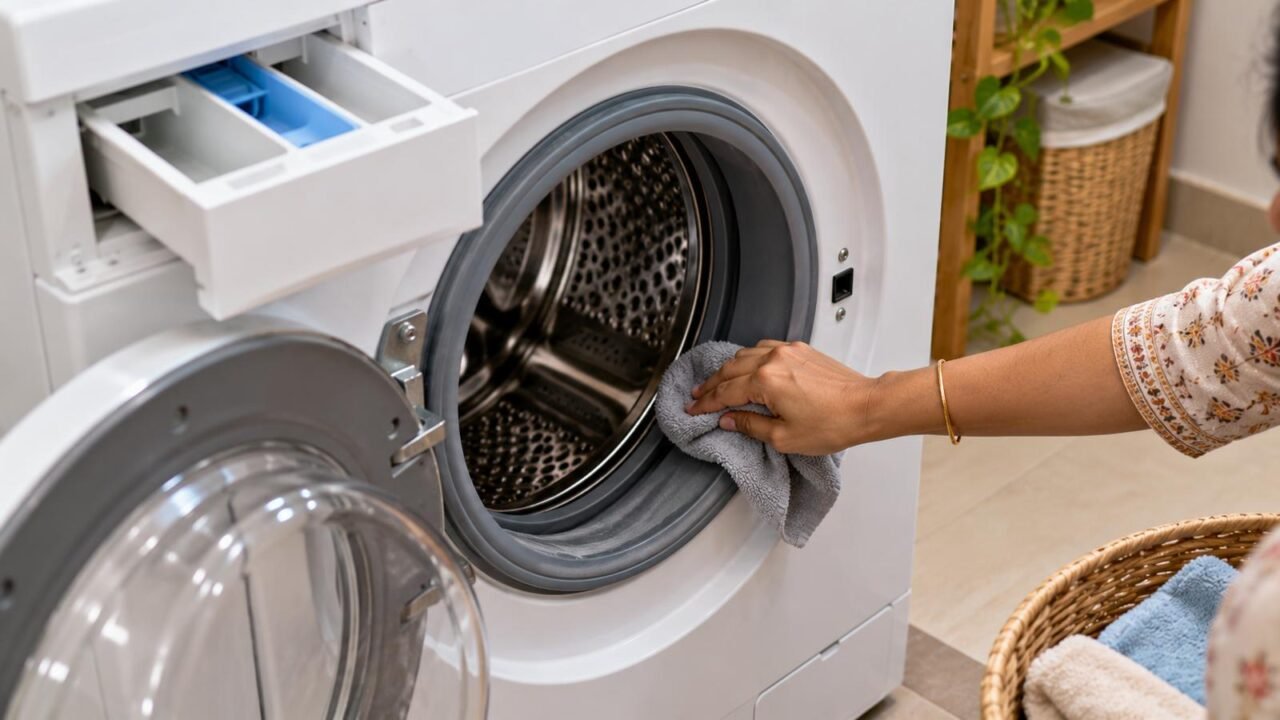
1. Wipe the rubber door seal (gasket)
Pull back the folds of the rubber seal and wipe inside with a cloth dipped in warm water and a little mild detergent. You will often find hair, coins, lint and black spots of mould. For stubborn spots, use a soft brush. Dry the seal fully.
2. Clean the detergent drawer
Most drawers pull out completely when you press a release tab. Soak the drawer in warm water for 15–20 minutes, scrub with an old toothbrush and rinse. Clean the drawer slot in the machine as well – mould often grows on its roof.
3. Clean the drain pump filter
Front loaders usually have a small hatch at the bottom front. Place a tray and towel below, open the small drain hose (if present) to let water out slowly, then unscrew the filter. Remove lint, hair, coins and hair clips, rinse the filter and screw it back firmly.
4. Run a drum clean cycle
Run the “Drum Clean”, “Tub Clean” or hottest cotton programme with the drum empty. Use a washing machine cleaner recommended by the brand, or as your manual suggests. Leave the door open afterwards.
Cleaning a top load washing machine
1. Clean the lint filter
Many top loaders have a lint filter on the side of the drum or in the centre pulsator. Remove it, clear the lint and rinse.
2. Run a tub clean cycle
Use the “Tub Clean” programme with an empty drum. If your model has no special programme, run the longest, hottest cycle with a washing machine cleaner as the manual suggests.
3. Wipe the lid and rim
Wipe the underside of the lid, the top rim of the tub and the detergent or softener dispensers, where residue and grime collect.
Cleaning a semi-automatic washing machine
- After each use, drain both tubs and wipe them dry.
- Clean the lint filter in the wash tub regularly.
- Once a month, fill the wash tub with warm water and a little washing machine cleaner or mild detergent, run the wash for a few minutes, let it stand, then drain and rinse.
- Check the drain hose for blockages and the spin tub for coins and hair clips.
Natural cleaners: what works and what to avoid
| Cleaner | Use for | Caution |
|---|---|---|
| Warm water + mild detergent | Door seal, drawer, outer body | Safe for most surfaces |
| Baking soda | Light odour removal | Use small amounts; rinse well |
| White vinegar | Light scale and odour | Some brands advise against frequent use on rubber parts; check the manual |
| Brand washing machine cleaner / descaler | Monthly drum clean, hard-water scale | Follow pack instructions |
| Bleach | Mould on seals (diluted) | Never mix with vinegar or other cleaners; check the manual first |
Hard water: extra steps
In areas with hard water, scale builds up on the drum and the heater of front loaders. Use the correct detergent dose for hard water, avoid always washing at the highest temperature, and run a descaling clean every couple of months with a product the brand approves. If your machine has an inlet filter at the back where the hose connects, check it for grit every few months.
Habits that keep the machine fresh
- Remove wet clothes as soon as the cycle ends.
- Leave the door or lid and the detergent drawer slightly open after each wash.
- Use the right detergent: low-foam front-load detergent for front loaders.
- Do not overdose detergent or fabric softener – excess builds up as gunk.
- Empty pockets before washing to keep coins and clips out of the filter.
- Wash towels and bedding on a warmer setting from time to time, as the care label allows.
When to call service
- The machine still smells after cleaning and drum-clean cycles.
- Water does not drain even after clearing the filter.
- Error codes about drainage, water level or the heater keep appearing.
- Water leaks from under the machine.
Buying a new machine? See our best washing machines in India guide and our front load vs top load comparison.
Final word on how to clean a washing machine
We review this guide on how to clean a washing machine regularly as models and listings change. Always check the latest details on the product page before you buy, and see official information on the BEE Star Label site.
Frequently Asked Questions
1. How do I remove the bad smell from my washing machine?
Clean the door seal, detergent drawer and drain filter, then run a drum-clean cycle with a cleaner the brand approves. Leave the door and drawer open after every wash so the inside dries.
2. How often should I clean my washing machine?
Run a drum or tub clean once a month, clean filters and the detergent drawer every 2–4 weeks, and wipe a front loader’s door seal weekly.
3. Can I use vinegar to clean my washing machine?
Occasional use of diluted vinegar can help with light scale and smells, but some brands advise against frequent use on rubber parts. Check your manual and never mix vinegar with bleach.
4. Where is the filter in a front load washing machine?
Usually behind a small hatch at the bottom front of the machine. Place a towel and tray below, drain the water slowly, then unscrew and clean the filter.
5. Why are there black spots on my front loader door seal?
They are usually mould from moisture and detergent residue. Wipe the seal with warm water and mild detergent, dry it fully, and leave the door open after each wash.
Final Thoughts
A washing machine stays fresh with a few minutes of care each month. Clean the door seal, detergent drawer and filter, run a drum-clean cycle, and leave the machine open to dry after each wash. In hard-water areas, add a regular descale. These simple habits prevent smells, protect your clothes and help the machine last for years.