
In this guide
- How often should you clean a kitchen chimney?
- Before you start: safety
- Things You Need
- Step-by-Step Instructions
- Cleaning baffle filters
- Cleaning a filterless or auto-clean chimney
- Cleaning the outer hood and glass
- Home remedies that work – and ones to avoid
- When to call a technician
- Habits that keep a chimney cleaner for longer
- Final word on how to clean a kitchen chimney
- FAQs
- Final Thoughts
If your chimney sounds louder than it used to, the kitchen still smells of last night’s tadka, or a few drops of brown oil drip onto the stove, the chimney is asking to be cleaned. Oil and smoke from Indian cooking build up quickly. Left alone, they reduce suction, make the motor work harder and, in the worst case, become a fire risk above a hot stove. In this guide on how to clean a kitchen chimney, we keep everything simple and practical for Indian homes.
The good news is that most of the cleaning is simple and needs only hot water, dish soap and baking soda. This guide covers baffle filter chimneys, filterless and auto-clean chimneys, and the outside of the hood, along with what you should leave to a technician. It follows the cleaning advice brands give in their manuals; always check yours for model-specific steps.
How often should you clean a kitchen chimney?
| Part | Light cooking | Daily tadka and frying |
|---|---|---|
| Baffle or mesh filters | Every 4 weeks | Every 2–3 weeks |
| Oil collector cup (filterless) | Every 4–6 weeks | Every 2–3 weeks |
| Auto-clean cycle | As the manual suggests or when the indicator lights up | Every 2–4 weeks |
| Outer hood and glass | Weekly wipe | Every few days |
| Professional deep clean | Once a year | Once a year, ideally before Diwali |
Before you start: safety
- Switch off the chimney and the switch on the wall. Let the hood cool if you have just cooked.
- Turn off the gas stove and remove pans. You will be standing close to the burners.
- Use a stable step stool, not a plastic chair.
- Do not spray water or cleaners into the motor area or onto the control panel.
- Wear rubber gloves. Old oil is sticky and baking soda solutions can dry the skin.
Things You Need
- Rubber gloves
- Large tub, sink or bucket
- Very hot water
- Baking soda (3–4 tablespoons)
- Dishwashing liquid
- Soft nylon brush or old toothbrush
- Microfibre cloths
- Stable step stool
Step-by-Step Instructions
-
Step 1: Switch off and cool down
Turn off the chimney at the wall and the gas stove, remove pans and let the hood cool if you have just cooked.
-
Step 2: Remove filters or the oil collector
Release baffle filters carefully, holding them from below, or remove the oil collector cup of a filterless chimney after running auto-clean.
-
Step 3: Soak in hot soapy water
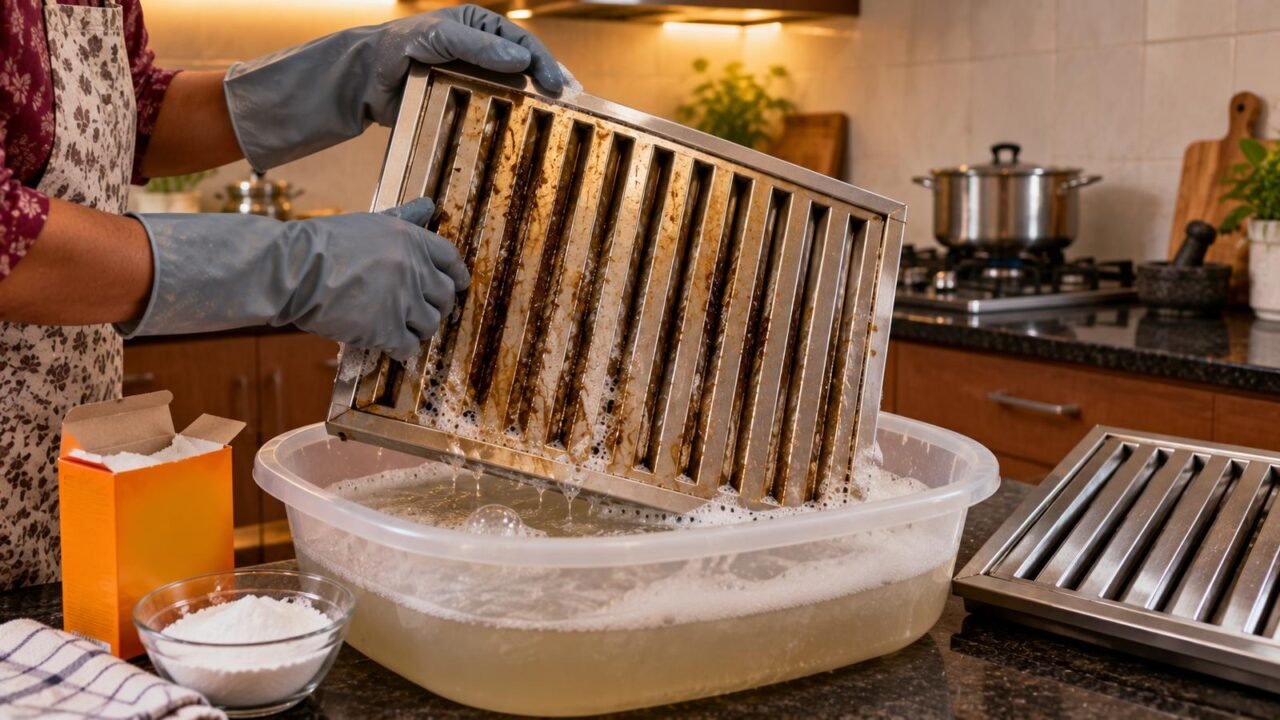
Soak baffle filters for 1–2 hours (or overnight for heavy grease) in hot water with baking soda and dish soap. Wash the oil collector in hot soapy water.
-
Step 4: Scrub, rinse and dry
Scrub gently with a soft brush, rinse with hot water and let everything dry fully before refitting.
-
Step 5: Wipe the hood and glass
Wipe stainless steel along the grain with mild soap, clean glass with diluted vinegar, and use only a barely damp cloth on the control panel.
Cleaning baffle filters
Baffle filters are the curved steel or aluminium panels under the hood. They catch most of the oil, so they need the most attention.
- Remove the filters. Most have a small spring latch or handle. Hold the filter from below as you release it so it does not drop onto the stove.
- Prepare a soaking tub. Fill a large tub, sink or bucket with the hottest tap water you can safely handle. Add 3–4 tablespoons of baking soda and a good squeeze of dishwashing liquid.
- Soak for 1–2 hours. For heavy grease, soak overnight. The hot water softens the oil; the baking soda helps lift it.
- Scrub gently. Use a soft nylon brush or old toothbrush along the curves. Avoid steel wool, which scratches the finish and makes oil stick faster next time.
- Rinse and dry fully. Rinse with hot water and let the filters dry completely before refitting.
Can baffle filters go in a dishwasher? Many stainless steel baffle filters are dishwasher-safe. Aluminium filters may discolour. Check your manual first.
Cleaning a filterless or auto-clean chimney
Filterless chimneys have no front filter to wash, but the oil still has to go somewhere – into an oil collector cup or tray.
- Run the auto-clean cycle if your chimney has one. It heats the inner chamber so the trapped oil melts and flows into the collector. Follow the manual – some models need the collector in place and the hood cool before starting.
- Remove the oil collector once the cycle ends and the chimney cools. Empty the oil into a disposable container, not the sink drain.
- Wash the collector in hot soapy water, dry it and refit it firmly.
- Wipe the inner panel that you can reach with a cloth dipped in warm soapy water and squeezed well.
Auto-clean does not clean everything. A once-a-year professional service is still a good idea to clean the blower and the inner chamber thoroughly.
Cleaning the outer hood and glass
- Stainless steel: wipe with a soft cloth dipped in warm soapy water, then a clean damp cloth, and dry. Wipe in the direction of the steel grain. Use a stainless steel cleaner only if the manual allows it.
- Black or painted finish: use only mild soap and a soft cloth. Abrasive powders leave scratches.
- Glass: a few drops of dish soap in warm water, or a little white vinegar in water, followed by a dry microfibre cloth.
- Control panel: spray cleaner on the cloth, never on the panel. Touch panels need only a barely damp cloth.
Home remedies that work – and ones to avoid
| Use | Avoid |
|---|---|
| Hot water + dish soap | Steel wool or wire brushes |
| Baking soda paste for stubborn spots | Strong acids or toilet cleaners |
| White vinegar diluted in water (glass and steel) | Caustic soda on aluminium filters |
| Soft nylon brush or old toothbrush | Spraying water into the motor |
Caustic soda (sodium hydroxide) is sometimes suggested online for very greasy filters. It is harsh on skin and eyes and can damage aluminium, so we do not recommend it for home use. Stick to soaking longer instead.
When to call a technician
- Suction stays weak even after cleaning the filters or running auto-clean.
- The motor makes grinding or rattling sounds.
- Oil drips from the hood even with a clean collector.
- The lights or controls stop working, or the chimney trips the switch.
- It has been more than a year since the last professional service.
Book the brand’s authorised service where possible, especially if the chimney is under warranty.
Habits that keep a chimney cleaner for longer
- Switch the chimney on before you start cooking, not after the smoke appears.
- Keep it running for 5–10 minutes after you finish to clear lingering smoke and moisture.
- Use the higher speed for tadka and frying, and a lower speed for boiling and simmering.
- Keep the kitchen window near the stove closed while the chimney runs, so air flows towards the hood.
- Use a lid when deep-frying where possible to reduce oil splatter.
Thinking of replacing an old chimney? Read our best kitchen chimneys in India guide. Cleaning the rest of the house for the festival? See our Diwali cleaning checklist for appliances.
Final word on how to clean a kitchen chimney
We review this guide on how to clean a kitchen chimney regularly as models and listings change. Always check the latest details on the product page before you buy, and see official information on the Bureau of Indian Standards (BIS).
Frequently Asked Questions
1. How do I clean a very oily chimney filter?
Soak it overnight in the hottest water you can safely handle with 3–4 tablespoons of baking soda and dish soap, then scrub gently with a soft brush and rinse with hot water. Repeat the soak if needed instead of using harsh chemicals.
2. Does an auto-clean chimney need manual cleaning?
Yes, a little. Auto-clean melts oil into the collector, but you still need to empty and wash the collector, wipe the outer hood, and book an annual professional service.
3. Can I wash chimney filters in a dishwasher?
Many stainless steel baffle filters are dishwasher-safe, but aluminium filters may discolour. Check your chimney manual before using a dishwasher.
4. Why is my chimney not pulling smoke after cleaning?
Check that the filters are refitted correctly, the duct is not blocked or crushed, and the window near the stove is closed. If suction is still weak, the blower may need a professional clean or the motor may need service.
5. Is vinegar safe for cleaning a stainless steel chimney?
Diluted white vinegar is generally fine for wiping glass and stainless steel, followed by a clean damp cloth and drying. Do not leave it on the surface for long, and check your manual for any restrictions.
Final Thoughts
Cleaning a chimney is mostly about soaking, not scrubbing. Switch it off, soak baffle filters or wash the oil collector in hot soapy water with baking soda, wipe the hood gently, and dry everything before refitting. Do this every few weeks, run the chimney for a few minutes after cooking, and book a professional service once a year to keep suction strong and the kitchen fresh.